One in four student visa decisions in the September quarter was a refusal. The rise is concentrated in South Asia and offshore. Since then, the rules have moved again.
The numbers
Home Affairs data to 30 September 2026 covers the first quarter of this financial year.
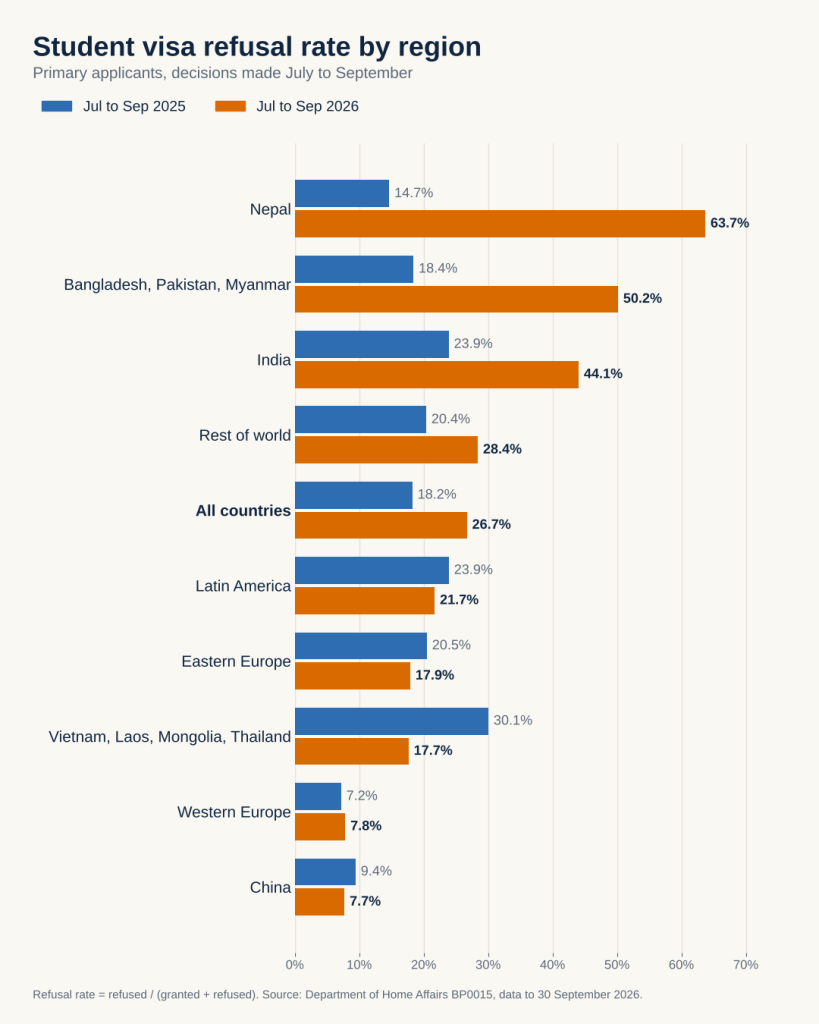
Across all countries, 26.7 per cent of primary student visa decisions were refusals. In the same quarter last year it was 18.2 per cent.
The increase is not spread evenly.
- Nepal: 14.7 to 63.7 per cent
- Bangladesh, Pakistan and Myanmar: 18.4 to 50.2 per cent
- India: 23.9 to 44.1 per cent
Other regions moved the other way.
- China: 9.4 to 7.7 per cent
- Vietnam, Laos, Mongolia and Thailand: 30.1 to 17.7 per cent
- Latin America: 23.9 to 21.7 per cent
- Eastern Europe: 20.5 to 17.9 per cent
- Western Europe: steady at around 8 per cent
Offshore overtook onshore
For most of the last two years, onshore applicants were refused more often than offshore applicants. Since January 2026 that has flipped.
Offshore refusals peaked at 40.3 per cent in March 2026. In September the offshore rate was 25.3 per cent against 18.3 per cent onshore.
The timing lines up with India, Nepal, Bangladesh, Bhutan, Pakistan and Afghanistan moving to Evidence Level 3 on 8 January 2026. Evidence levels apply from the date of lodgement, so the effect built through the first quarter of the calendar year.
The onshore figure needs care. It reflects decisions made before 2 October 2026. Since that date, most temporary visa holders can no longer apply for a student visa in Australia at all. The onshore pipeline in this data no longer exists in the same form.
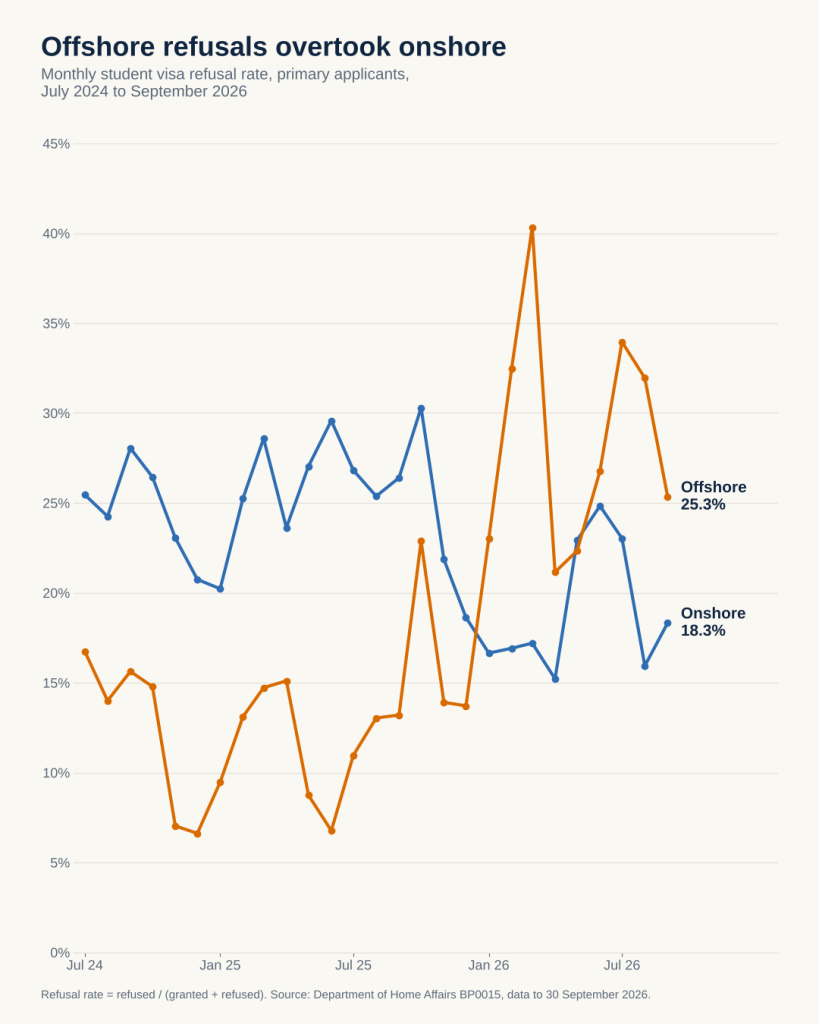
Source: Department of Home Affairs, BP0015 student visa lodged, granted and grant rate reports, locked at 30 September 2026. Primary applicants. Refusal rate = refused / (granted + refused), by date of decision.
What has changed since the quarter closed
The rules have moved on four fronts: student visas, the 485, protection visa reviews and the 407. Most are already in force. The 407 change starts on 12 November.
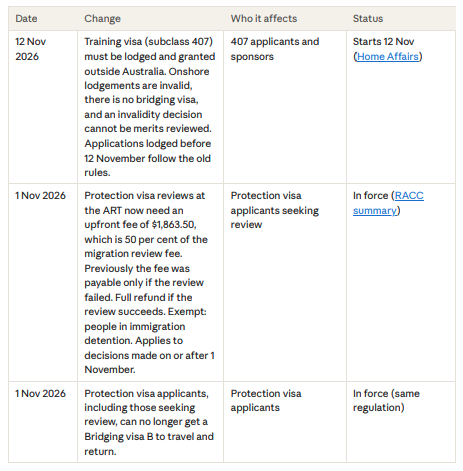
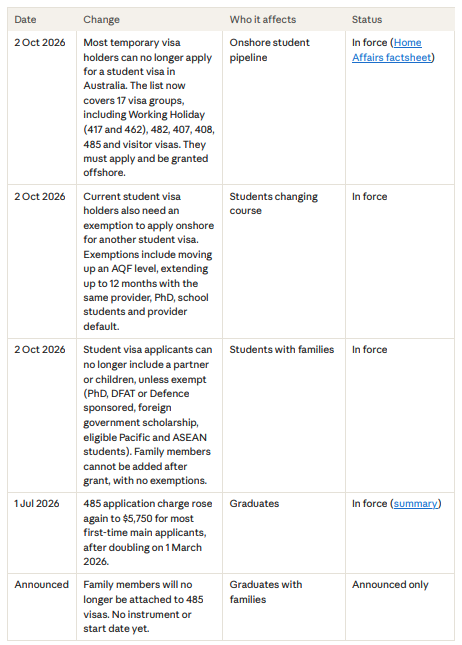
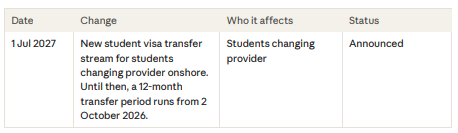
One point stands out against the data. Working Holiday Makers were the fastest-growing onshore source of student visa grants: 2,459 in the September quarter, up from 1,593 a year earlier. That pathway closed on 2 October.
What this means for agents
- Student visa onshore applications are available only to exempt applicants: Since 2 October, most onshore clients on a Working Holiday, visitor, 482, 407 or 485 visa must leave Australia to apply for a student visa. Advise them before their current visa runs out.
- South Asian offshore applications under highest scrutiny: Nepal, Bangladesh, Pakistan and India now refuse at 44 to 64 per cent. Finances, loan serviceability and course rationale need to be documented in full.
- Most student applicants can no longer include a partner or children, and none can be added after the grant. Similar restrictions are coming for the 485.
- Course changes and AQF progression. Onshore further student visas now need an exemption, and moving up a level is the main one. A sideways or downward move means an offshore application.
- 407 clients onshore have until 11 November. From 12 November 2026 an onshore 407 lodgement is invalid, with no merits review.
- Protection review now costs $1,863.50 upfront. Clients refused on or after 1 November need to fund the review at lodgement. Budget for it in the advice.
- A refusal costs more than the fee. It stays on the client’s record and affects every application after it.
Sources
- Department of Home Affairs, BP0015 student visa reports, locked at 30 September 2026
- Home Affairs: Changes to Training visa application rules (subclass 407)
- Home Affairs: Changes to Student visa application rules factsheet
- Migration Amendment (2026 Measures No. 1) Regulations 2026 (protection review fee and Bridging visa B changes)
- Migration (Student Visa Applications to Be Made from outside Australia) Instrument 2026, LIN 26/102
Is your practice built to run?
Take the free RUN Assessment: five maturity levels, one clear next step. Or join other registered migration agents in the Built to RUN group on LinkedIn.
Take the RUN Assessment Join Built to RUN
#StudentVisa #Subclass500 #AustralianImmigration #InternationalEducation #MigrationAgents #Subclass407 #Subclass485 #HomeAffairs